Day 2 - Monday - Jan 8, 2024

| Ushuaia, Argentina |
|
Depart: 6:00 pm |
Capital of Argentina's Tierra del Fuego province, Ushuaia is considered the gateway to the White Continent and the South Pole. Nicknamed "El fin del mundo" by the Argentinian people, this city at the end of the world nestles in the shelter of mountains surrounded by fertile plains that the wildlife seem to have chosen as the ultimate sanctuary. With its exceptional site, where the Andes plunge straight into the sea, Ushuaia is one of the most fascinating places on earth, its very name evocative of journeys to the unlikely and the inaccessible...
Day 3 - Tuesday - Jan 9, 2024

| Drake Passage, Antarctica |
|
|
Use your days spent in the Drake Passage to familiarize yourself with your ship and deepen your knowledge of the Antarctic. The Expedition Leader will first present the IAATO rules of conduct that must be observed during landings in the region and will explain everything you need to know about the zodiac outings. Lectures about the history and wildlife of the Antarctic will be an opportunity for you to learn more about this magical region, where every cruise is a unique experience. From the ship's bridge, you will experience exceptional sailing moments before joining the naturalist-guides on your ship's exterior decks to look out for albatrosses, cape petrels, and other seabirds flying over the Drake Passage.
Day 4 - Wednesday - Jan 10, 2024
| Drake Passage, Antarctica |
|
|
Day 5 - Thursday - Jan 11, 2024

| Crossing the Arctic Circle |
|
|
Weather permitting, we'll cross the mythic line of the Antarctic Polar Circle, located along 6633' south of the Equator. This iconic area demarcates the point from which it is possible to view the midnight sun during the December solstice. Within this circle, the sun remains above the horizon for 24 consecutive hours at least once a year. Crossing this line, an experience known to few people, is sure to be an unforgettable highlight of your cruise through the polar regions.
Day 6 - Friday - Jan 12, 2024
| Charcot Island, Antarctica |
|
|
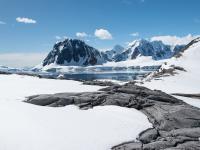
When he discovered this island surrounded by sea ice in 1910 from aboard the Pourquoi Pas ? as he mapped Alexander Island, Jean-Baptiste Charcot had not be able to get less than 40 miles away from it. Situated in a zone that experiences frequent low-pressure systems and regular cloud cover, the island remains in many ways an enigma. It is entirely covered in ice and sheer cliffs, with the exception of the rocky outcrops extending over a dozen kilometres in the far north-west. The ice in the narrowest part of Wilkins Sound has been cracking in recent times, thus officially detaching this island from its neighbour, Alexander Island, lying 50 km away. Very few people have landed on this largely untouched island, whose waters attract numerous seabirds, such as petrels, Antarctic terns, and skuas.
Day 7 - Saturday - Jan 13, 2024

| Bellingshausen Sea, Antarctica |
|
|
Stretching from the west of the Antarctic Peninsula to the Amundsen Sea, the Bellingshausen Sea was named after the Russian admiral and explorer who has been attributed the first confirmed sighting of mainland Antarctica, in 1820. Among others, its waters surround two of the Antarctic's largest islands: Alexander Island and Thurston Island. You will explore this sea amid ice floe, blocks of sea ice, and majestic icebergs. The coastal areas along the Bellingshausen Sea are also renowned as the home of colonies of emperor penguins. Depending on the month of the southern summer, you will perhaps be lucky enough to observe isolated adults, adolescents seeking emancipation, or recently independent new adults.
Day 8 - Sunday - Jan 14, 2024
| Peter I Island, Antarctica, Antarctica |
|
|
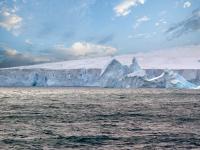
You will then head for the legendary Peter I Island. Located 450 kilometres away from the Atlantic coast, it was discovered in 1821 by the Russian explorer Fabian Gottlieb von Bellingshausen, who named it in honour of the Russian tsar Peter the Great. In 1909, Captain Charcot sighted it for the first time from aboard the Pourquoi Pas ?, but was unable to land there: "In the parting mists, one or two miles away, an enormous black mass shrouded in clouds appears suddenly before us: it is Peter I Island". Surrounded by pack ice and with about 95% of its surface covered by ice, this volcanic island, whose highest peak reaches 1,640 metres, is protected by ice cliffs some 40 metres tall, making any approach difficult.
Day 9 - Monday - Jan 15, 2024

The great Norwegian explorer Roald Amundsen - famous as one of the first five men to reach the geographic South Pole - gave his name to this southern sea in 1929, following an expedition in its waters. Almost entirely frozen by a thick ice floe, Amundsen Sea stretches along Marie Byrd Land in Antarctica, between Bellingshausen Sea to the west and the Ross Sea to the east. The monumental icebergs are all that break the monotony of the infinite ice floe here: let yourself be immersed in a feeling of tranquility before this vastness. These privileged moments sailing in the Amundsen Sea are opportunities to make the most of the original equipment and spaces on Le Commandant Charcot. Find yourself in this refined cocoon. Nourish yourself with the knowledge of the scientists and expert naturalists, who provide unique support during your polar cruise. Or simply contemplate the fascinating and captivating decor from the ship's exterior decks.
Day 10 - Tuesday - Jan 16, 2024

| Marie Byrd Land, Antarctica, Antarctica |
|
|
Marie Byrd Land is one of the most remote territories of our planet's most inaccessible continent. It is a real privilege to just be able to contemplate its shores! Between the Ross Sea and its large shelf to the east and Bellingshausen Sea to the west, the frozen coastlines of these lands are bordered by the Amundsen Sea, partially covered by a thick ice floe. Stretching over more than a million square kilometers (over 620,000 square miles) in Western Antarctica, its ground is also isolated from the rest of the continent by the Transantarctic Mountains. It is certainly this geographic remoteness and its harsh climate that have made it one of our planet's rare terra nullius, a territory claimed by no State. In 1929, Marie Byrd Land got its name from Admiral Richard E. Byrd, in honour of his wife, following his expedition to the region. The exploration of its ice-sculpted landscapes will plunge you into the infinite Antarctic desert, where penguins, seals, whales, and orcas are the only living souls. Depending on the time and weather conditions, your exploration of the region will take you towards a string of islands which, although little-known, remain fascinating: Siple Island and its eponymous mount, resulting from an old volcano, and Clark Island.
Day 11 - Wednesday - Jan 17, 2024
| Marie Byrd Land, Antarctica, Antarctica |
|
|
Day 12 - Thursday - Jan 18, 2024
| Marie Byrd Land, Antarctica, Antarctica |
|
|
Day 13 - Friday - Jan 19, 2024
| Marie Byrd Land, Antarctica, Antarctica |
|
|
Day 14 - Saturday - Jan 20, 2024
| Marie Byrd Land, Antarctica, Antarctica |
|
|
Day 15 - Sunday - Jan 21, 2024
| Marie Byrd Land, Antarctica, Antarctica |
|
|
Day 16 - Monday - Jan 22, 2024
| Marie Byrd Land, Antarctica, Antarctica |
|
|
Day 17 - Tuesday - Jan 23, 2024
| Marie Byrd Land, Antarctica, Antarctica |
|
|
Day 18 - Wednesday - Jan 24, 2024

| Crossing the International Date Line |
|
|
Your itinerary enables you to cross the International Date Line. This imaginary line across the Earth's surface approximately follows the 180th meridian in the Pacific Ocean. Because of the roundness of the Earth and the necessity of having reference time meridians, we have to change dates when we cross this line. So if your ship is travelling west, you will need to add a day to the expected date; conversely, if travelling east, you will take away a day. This paradox, already noted by Magellan's crews during his circumnavigation, plays a dramatic role in several novels, including Jules Verne's famous Around the World in Eighty Days.
Day 19 - Thursday - Jan 25, 2024

| Ross Sea Region, Antarctica, Antarctica |
|
|
"The last ocean" is what scientists from all around the world call this deep bay that runs along the edge of Antarctica between Marie Byrd Land and Victoria Land. In 2016, Ross Sea, the last intact marine ecosystem, became the world's largest marine protected area. The starting point for the greatest southern expeditions - particularly to the South Pole - it was explored by James Clark Ross between 1839 and 1843. It was then that he discovered the enormous barrier formed by a gigantic ice shelf extending out to the open sea and from which titanic icebergs are calved. Weather and ice conditions permitting, you will be able to discover several of the region's emblematic sites. Among the possible ports of call, Cape Adare, at the far north of the Borchgrevink Coast, is home to one of the world's largest Adelie penguin colonies. We will also try to get to Terra Nova Bay, home to the stunning Drygalski Ice Tongue. At least 4,000 years old, it stretches 70 km (43 miles) out to sea from the David Glacier and measures 24 km (15 miles) at its widest. On Ross Island, at the base of Mount Erebus, you will follow in the footsteps of the famous explorers Shackleton and Scott who chose Cape Royds and Cape Evans, respectively, to set up their base camps in anticipation of their future historic exploits. In the McMurdo Sound, separating the island from the continent, the scenery is surreal: the Taylor Glacier stretches its branch into the valleys devoid of snow above which stand mountains of stratified rock. A little further, in the Bay of Whales, another tale is told, that of the Norwegian Roald Amundsen, who left from this point to reach, for the first time, the South Pole in 1911.
Day 20 - Friday - Jan 26, 2024
| Ross Sea Region, Antarctica, Antarctica |
|
|
Day 21 - Saturday - Jan 27, 2024
| Ross Sea Region, Antarctica, Antarctica |
|
|
Day 22 - Sunday - Jan 28, 2024
| Ross Sea Region, Antarctica, Antarctica |
|
|
Day 23 - Monday - Jan 29, 2024
| Ross Sea Region, Antarctica, Antarctica |
|
|
Day 24 - Tuesday - Jan 30, 2024

Spend exceptional moments sailing onboard Le Commandant Charcot, the world's first luxury polar exploration vessel and the first PC2-class polar cruise ship capable of sailing into the very heart of the ice, on seas and oceans that the frozen conditions render inaccessible to ordinary ships. Le Commandant Charcot is fitted with oceanographic and scientific equipment selected by a committee of experts. Take advantage of the on-board lectures and opportunities for discussion with these specialists to learn more about the poles. Participate in furthering scientific research and let us discover together what these fascinating destinations have yet to reveal to us.
Day 25 - Wednesday - Jan 31, 2024

| Balleny Islands, New Zealand |
|
|
The Balleny Islands are an extremely remote series of islands extending for about 160 kilometers in a northwest-southeast direction straddling the Antarctic Circle some 270 kilometers north of the Antarctic mainland. The volcanic islands are heavily glaciated and have received few human visitors since their discovery in 1839. Their isolated location within the rich waters of the Southern Ocean has resulted in a species diversity rivalling the entire Ross Sea region. Humpback, fin, and minke whales are regular visitors to the rich feeding grounds along with crabeater, Weddell, elephant, and leopard seals. Several of the islands are home to significant colonies of Adelie and chinstrap penguins. If time and weather permit, we will have the opportunity to explore the spectacular coastal environments and view the prolific wildlife from our fleet of zodiac.
Day 26 - Thursday - Feb 1, 2024
Spend exceptional moments sailing onboard Le Commandant Charcot, the world's first luxury polar exploration vessel and the first PC2-class polar cruise ship capable of sailing into the very heart of the ice, on seas and oceans that the frozen conditions render inaccessible to ordinary ships. Le Commandant Charcot is fitted with oceanographic and scientific equipment selected by a committee of experts. Take advantage of the on-board lectures and opportunities for discussion with these specialists to learn more about the poles. Participate in furthering scientific research and let us discover together what these fascinating destinations have yet to reveal to us.
Day 27 - Friday - Feb 2, 2024
Day 28 - Saturday - Feb 3, 2024
Day 29 - Sunday - Feb 4, 2024
Day 30 - Monday - Feb 5, 2024

On the eastern coast of New Zealand's South Island, Lyttelton (or Te Whakaraupo in the Maori language) served, thanks to its proximity with Ross Island, as the starting point for the British expeditions in the mythical age of the South Pole explorations. It takes its name from George Lyttelton (1709-1773), aristocrat and colonial governor of South Carolina. In this colourful port town full of history, you'll be able to discover the Time Ball: constructed in 1876, it rang at 1 pm every day for 58 consecutive years to give Greenwich meridian time, enabling ship captains to set their chronometer and very precisely calculate their position.


