By Mark Flager, Sales Manager | November 26, 2018 ( Comments)
What Ushuaia's airport lacks in size, it makes up in charm and efficiency. Our charter flight landed, we deplaned into a giant wood-beamed lodge and walked all of 50 feet to Argentinian Customs and Immigration. We started to get a good look at our fellow passengers on this expedition – lots of parents and grown children, a three-generation family group with a two-year-old (an unflappable traveler, from all evidence), and a sizable number of people in their 30s and 40s. Silverseafcabbsdfdbydeeyx is the most cosmopolitan of luxury lines, and that bears out on this expedition as well – there are guests from Europe, South America and Asia as well as North America. We identified our bags, which followed us to the ship and appeared in our suite by 3 pm, as promised. (All guest accommodations on Silversea are suites.)
After lunch, exploring, unpacking and the mandatory lifeboat drill, everyone met in the Explorer Lounge to meet the expedition team and hear of the planned activities. Expedition Leader Schalk Botha introduced the 27 members of his team – geologists, biologists, ornithologists, historians, zodiac drivers and assorted specialists, many from South Africa, Australia and New Zealand. They are young, passionate about their fields and clearly love being on Silver Cloud.
The original plan was to sail at 6 pm Thursday and spend Friday and Saturday crossing the Drake Passage, perhaps in heaving seas and with similarly affected guests. Friday would feature lectures on tubenoses (birds), and the undersea terrain and photography, with opportunities to exchange parkas (provided) and boots (rented) if they did not fit. On Saturday would be a required session on landing protocols and a presentation required by the International Association of Antarctic Tour Operators (IAATO).
That was the plan anyway, until we set sail and Captain Vincent Talliard (an experienced expedition master who, like Botha, looks straight from central casting) revved up the engines and outraced some unpleasant weather, arriving a full day early to the Antarctic Peninsula.
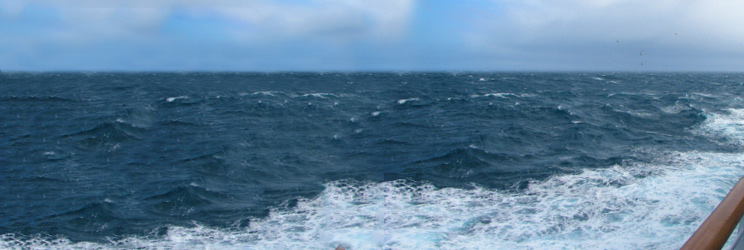
Botha had warned everyone that the Drake Passage could be hellish and dismal. Those weren't his exact words, but the inference was clear. The Passage is the portion of the Antarctic Ocean between the tip of South America and the Antarctic Peninsula. Consider this entry for the Antarctic Ocean in the 1962 “Standard Encyclopedia of the World's Oceans and Islands;” the subhead is “A cold and dangerous ocean.”
“'The Great Southern Ocean,' as the old-time sailors termed it, is still the most violent and dangerous, with vast seas that run without let or hindrance clean around the world. Nowhere else in the world can the fetch and run of the seas compare with those of Antarctica, for all other oceans are broken at some point by large land masses. In the Antarctic alone, the swell of moving waves runs eternally before the west-to-east air currents which drive with the turning earth.”
Is that cool, or what? So our crossing could have been brutal, but instead was entertaining for many, tolerable for most. The ship rolled fairly consistently, but there was not much pitching and none of the bow-banging waves that marked the previous crossing. There is no sleep like that of being rocked gently for hours on end.
It became apparent on Friday that we were making and should continue to make great speed, so Botha reordered the schedule and set the mandatory landing session and the IAATO presentation for Friday afternoon. He wanted to be sure we were ready to go if we were able to make a landing or a zodiac cruise on Saturday.


